
Introduction
Impaction of hardened fecal material (fecaloma) is a concerning complication of chronic constipation and impaired colonic motility. If not recognized and treated in a timely manner, fecaloma impaction can progress to stercoral colitis, an inflammatory reaction of the wall of the colon. Further neglect is associated with significant morbidity and mortality as patients develop focal colonic pressure ischemia from the impacted stool that may result in necrosis, ulceration, and eventual perforation of the colon. While patients who are incapacitated or institutionalized are at highest risk for fecal impaction, the general population is not immune to the complications of fecaloma formation.1
A step-up approach to fecaloma management should be implemented with the regimen tailored to the location and severity of the impaction. First line therapies include oral osmotic laxatives, manual disimpaction, and rectal therapies which include enemas and suppositories. Oral agents, most commonly polyethylene glycol (PEG 3350) administered at 1-1.5 g/kg/day for 3-6 days, can be used as monotherapy or combined with other laxatives including mineral oil, lactulose, and magnesium salts.2 Commonly used enemas include tap water, normal saline, mineral oil, soap suds, sodium phosphate, and docusate sodium enemas.1,3 Distal impactions usually involve repeated rectal administration of suppositories or enemas while more proximal disease may require high-volume PEG electrolyte lavage, typically administered via nasogastric tube once mechanical obstruction has been excluded.1,3 Although these approaches can be effective, a significant subset of patients fail conservative therapy.3,4 In a randomized trial of adults with fecal impaction causing colonic obstruction, enemas alone achieved successful disimpaction in only 69.4% of patients.3
Multiple adjuncts to first line oral therapy have been proposed. Hyperosmotic contrast agents such as Gastrografin (diatrizoate meglumine) draw water into the bowel lumen helping to soften fecalomas. Use of enteral Gastrografin has demonstrated higher disimpaction rates when compared to enemas alone in a randomized study (88.6% vs. 69.4%, p = 0.034). Mucolytic agents such as oral N-acetylcysteine (NAC) have also been used, most frequently during cases of cystic fibrosis related distal intestinal obstruction syndrome.5 NAC works by breaking down the mucoid content of the intestinal mass through reduction of disulfide bonds between mucin molecules, but it is generally considered an add-on to osmotic therapy and not the primary treatment.6,7
Enzymatic agents, including papain and cellulase, have demonstrated effective bezoar dissolution capability, further supporting the concept of chemically mediated breakdown of luminal concretions. Papain is a proteolytic enzyme from the papaya fruit that breaks down proteins and is commonly used in digestive enzyme supplements. In a review of the dissolution of phytobezoars, papain achieved dissolution in 87% (13/15) of phytobezoar cases, while cellulase achieved 100% (19/19).8 However, papain was associated with significant adverse effects including gastric ulcer, esophageal perforation, and hypernatremia, whereas cellulase reported none. Since papain and cellulase act on different components of the bezoar papain on protein linkages and cellulase on cellulose fibers combination therapy has been suggested to enhance efficacy.8
Several non-operative therapies have been described for escalation of management of refractory fecalomas. Pulsed irrigation enhanced evacuation (PIEE) uses a device that delivers pulses of small volumes of warm water into the rectum to rehydrate inspissated stool and stimulate peristalsis, facilitating evacuation without the need for sedation or operative intervention. In a series of 14 patients with massive fecal impaction who would otherwise have required surgical intervention, PIEE achieved complete evacuation in all cases with no additional morbidity.9
Interest has also grown around chemical dissolution strategies for intraluminal fecal concretions. Carbonated beverages have been explored as an enema solution for refractory fecalomas. Estevez et al. reported the case of an 82-year-old woman with a 12.2 centimeter (cm) sigmoid fecaloma refractory to polyethylene glycol, senna, mineral oil, and sodium phosphate enemas. By using two 1 liter (L) Classic Coca-Cola enemas, there was significant reduction in fecaloma size, confirmed with computed tomography (CT) imaging, and complete resolution of symptoms, allowing the patient to avoid surgery.10 This approach builds on the previous use of carbonated beverages for gastric phytobezoar dissolution. The proposed mechanism of fecaloma dissolution is a combination of low pH, carbon dioxide mediated mechanical fragmentation, and mucolysis. This may represent an effective chemical agent for dissipation of inspissated fecal material in the distal colon and rectum.
When conservative measures fail, endoscopic intervention may be used, although its role remains limited. The American Society for Gastrointestinal Endoscopy notes that colonoscopy is not established as routine therapy for fecal disimpaction.11 Despite this, multiple case reports and small series have described successful endoscopic management using a variety of techniques.12 Sigmoidoscopy-assisted rectal lavage, mechanical fragmentation using endoscopic snares and grasping devices, and combined irrigation and extraction methods have all been described.9,12,13 Although these reports are limited by small sample sizes, they suggest that endoscopy may offer a minimally invasive middle ground between first line therapy and open surgical intervention.
Despite a multitude of documented therapies for dissolution of enteric concretions, a standardized minimally invasive approach for the management of large or refractory fecalomas has not been established. Surgical intervention is only considered as a last resort for complicated or refractory cases because of the substantial morbidity and mortality. A systematic review of 137 patients with stercoral perforation reported an overall mortality of 34%, with the sigmoid colon (50%) and rectosigmoid junction (24%) as the most common perforation sites.3 Even in the absence of perforation, stercoral colitis itself carries a 3.3% three-month mortality rate.5 The most commonly performed emergency surgery is the Hartmann procedure which consists of primary resection of the fecalized sigmoid colon and end colostomy. This procedure is preferred due to lower technical complexity compared to resection and primary anastomosis and avoids the risks of primary anastomosis failure in the setting of peritonitis.9,14 However, colostomy reversal is performed in fewer than 50% of cases, leaving many patients with permanent ostomies that lower overall quality of life.6
Case Presentation
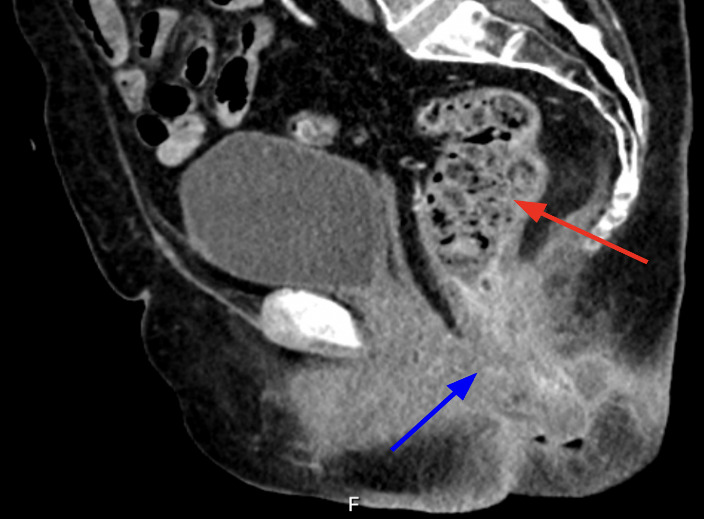
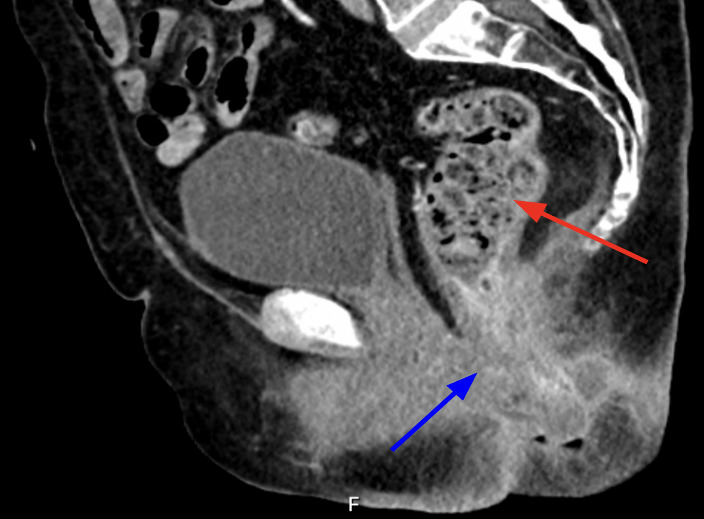
We present the case of an 86 year old female with a past medical history of rectal cancer who received chemo-radiation (last radiation treatment three weeks prior to presentation and last chemotherapy treatment six weeks prior to presentation), painful external hemorrhoids, ulcerative colitis, atrial fibrillation, hypertension, and hyperlipidemia. She was admitted to the hospital from the emergency department with a chief complaint of progressively worsening rectal pain and painful production of hard pelleted stool. Abdominal examination was negative for distention, tenderness, guarding, or masses. Digital rectal examination could not be performed due to severe pain. The patient declined an enema. Due to the severe pain with defecation, we determined that oral laxatives would lead to unnecessary and prolonged pain. Computer tomography (CT) demonstrated thickening of the lower rectum consistent with history of rectal cancer and desiccated stool within the rectal vault.
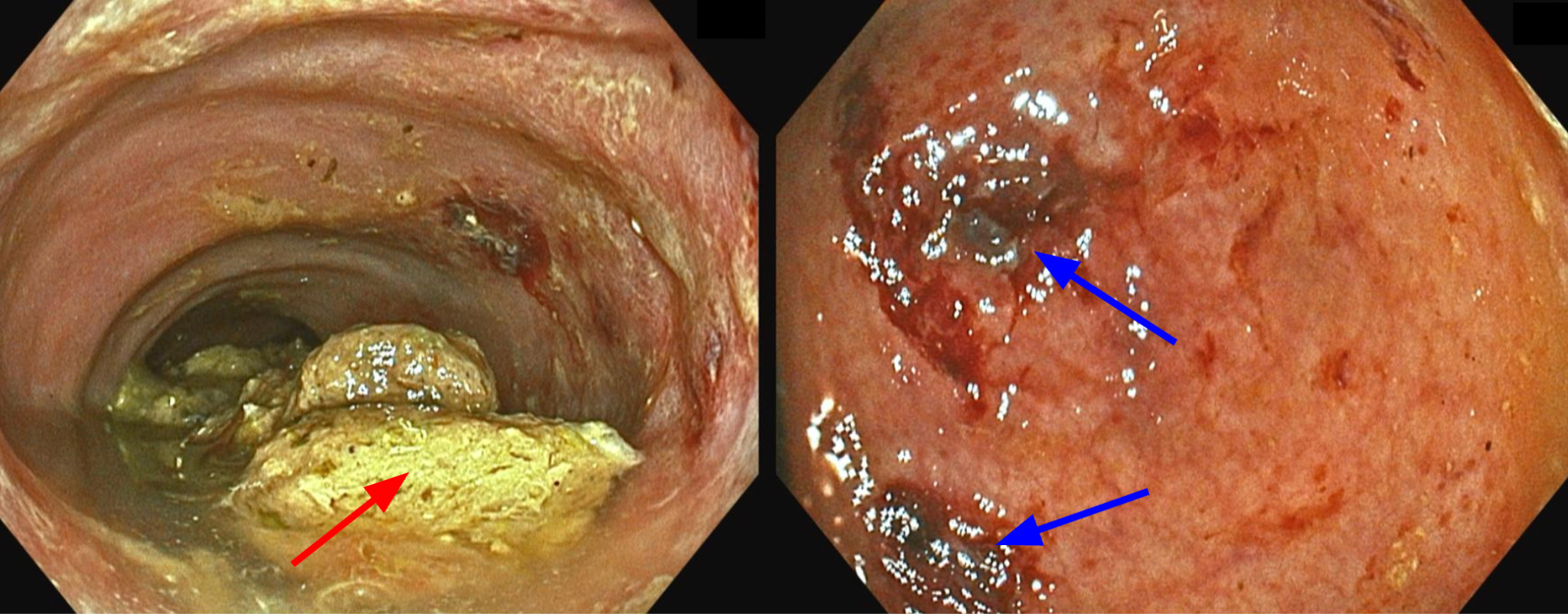
The next day the patient underwent an examination under anesthesia and flexible sigmoidoscopy under monitored anesthesia care (MAC). The patient was placed in the left lateral decubitus position. Digital rectal examination confirmed multiple external hemorrhoids, anal sphincter stenosis, and a large amount of hardened stool in the rectal vault which was partially digitally disimpacted. Two flexible rectal tubes were inserted into the rectum; one was used to lavage the rectal vault with 2 L of saline irrigation while the second aspirated. After removing the rectal tubes, we inserted a flexible sigmoidoscope and insufflated the rectum. We were unable to pass the sigmoidoscope more than 10 cm into the rectum due to a large fecaloma which consisted of hardened stool, undigested food particles, and a single clear candy wrapper. Via the endoscope, additional 10 L of irrigation was used to directly lavage the fecaloma with no noticeable decrease in size. Due to our team’s experience and success with using Classic Coca-Cola in the form of an enema, we proceeded to fill the sigmoidoscope’s water reservoir with 1 L of Pepsi (Classic Coca-Cola was not available). Approximately 200 milliliters (mL) of Pepsi was lavaged over the fecaloma resulting in the entirety of the video screen being filled with carbonated bubbles, significantly reducing visibility. Once visibility was lost, the Pepsi lavage was immediately aspirated. To our surprise, the entirety of the previously visualized fecaloma was dissolved leaving the rectal wall clean and uncovering an area of mucosal ischemia, likely due to a combination of radiation proctitis and stercoral ulcer. The remainder of the Pepsi was used to lavage the left colon with similar efficacy. We attempted to pass the endoscope into the transverse colon but more hardened stool made this impossible. An additional 10 L of irrigation was lavaged over the remaining stool, again resulting in no significant decrease in its size. We determined that no additional intervention was required and the sigmoidoscope was retracted, marking the end of the procedure.
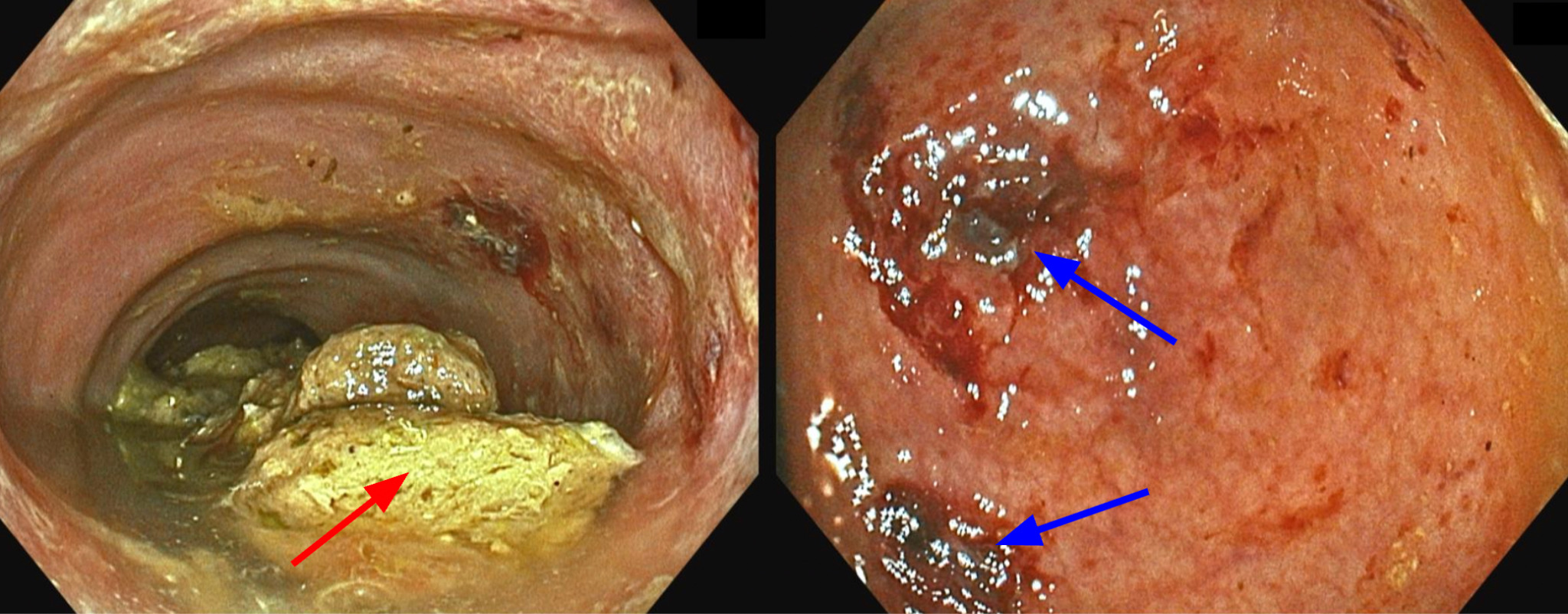
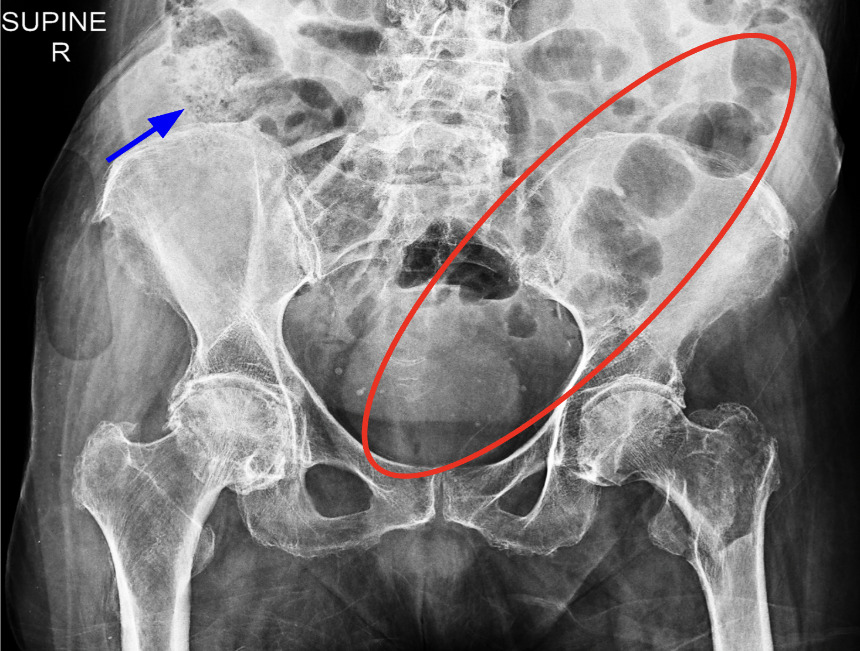
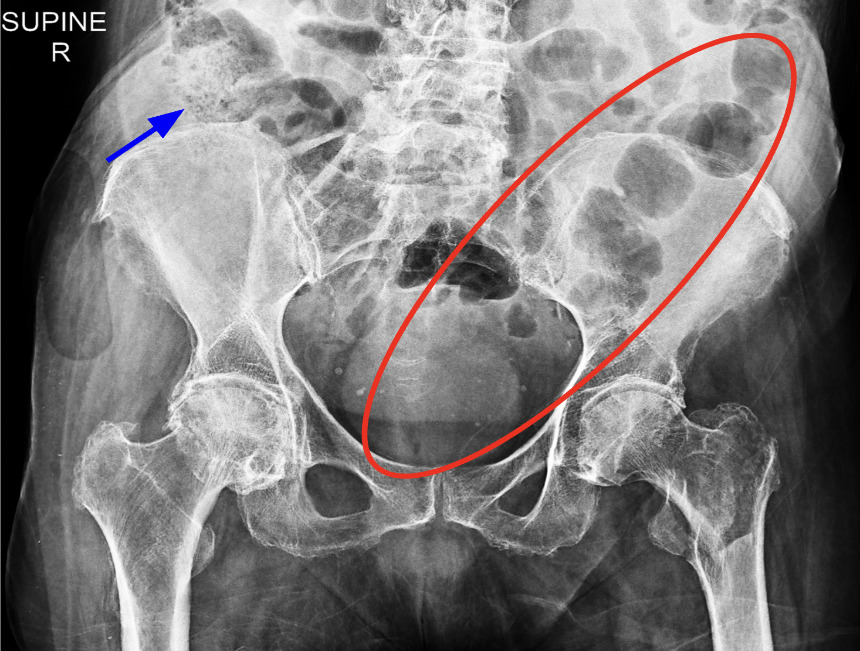
In the postoperative anesthesia care unit (PACU) the patient had severe anal pain which was alleviated with a single dose of IV morphine. Overnight the patient had multiple episodes of diarrhea. Pelvic X-ray was obtained and shows no significant stool burden in the rectum or descending colon with persistent stool in the ascending colon. Post discharge follow-up was attempted but the patient has been lost to follow-up.
Discussion
This case demonstrates the successful use of Pepsi administered as a rectal lavage via flexible sigmoidoscopy for the dissolution of a symptomatic rectal fecaloma in an elderly patient with a complex oncologic and gastrointestinal history. To our knowledge, this is the first reported use of Pepsi for endoscopic fecaloma dissolution, and one of very few cases describing Soda-mediated Hydrofragmentation disImpaction and Toiletization (SHIT) therapy for fecal impaction.
The patient’s comorbidities are notable for several converging risk factors for fecaloma formation. Radiation proctitis, a well-recognized complication of pelvic radiation therapy, impairs rectal compliance and motility and is associated with constipation and fecal retention.6 The patient’s history of radiation for rectal cancer likely compounded these effects, as both modalities independently contribute to colonic dysmotility and mucosal injury.6 The progressive nature of the patient’s symptoms following her last radiation session is consistent with acute radiation proctitis evolving into a functional obstruction exacerbated by fecaloma formation. The patient’s extensive hemorrhoidal disease further compromised her anorectal function and limited the feasibility of conservative treatment with enemas, manual disimpaction, or oral laxatives.
The decision to use “SHIT” therapy in this setting draws on an established body of literature in the management of gastric phytobezoars. A systematic review by Ladas et al. demonstrated that Classic Coca-Cola achieved complete dissolution of phytobezoars in more than half of cases as monotherapy and was even more highly effective when combined with endoscopic fragmentation.15 The proposed mechanisms include acid-mediated chemical degradation (pH approximately 2.5), carbon dioxide bubble penetration causing mechanical disruption of the concretion surface, and the mucolytic properties of sodium bicarbonate generated during the carbonation process.16,17
These proposed mechanisms of fecaloma dissolution are not specific to any single brand of carbonated soft drink and would be expected to apply similarly to Pepsi, which shares a comparable pH, carbonation level, and phosphoric acid content as the more commonly used Classic Coca-Cola. Despite the extensive literature on cola dissolution of phytobezoars, reports of carbonated beverage use for fecal impaction remain exceedingly rare.13 Ferre-Aracil et al. described the successful resolution of distal intestinal obstruction syndrome in a cystic fibrosis patient by instilling 1 L of Diet Coca-Cola through the colonoscope working channel directly onto impacted feces in the cecum and right colon, with complete resolution within 24 hours.18 The present case differs from these reports in several important respects: the pathology was a true rectal fecaloma rather than inspissated mucoid stool or mineral concretion; the dissolution was immediate rather than delayed; and the agent used was Pepsi rather than Diet Coca-Cola.
The fecaloma’s resistance to mechanical and hydraulic disruption is characteristic of large, desiccated fecalomas, which develop a hardened outer shell that is poorly penetrated by aqueous solutions alone.4 The failure of saline irrigation necessitated an alternative strategy, prompting the use of Pepsi as a dissolution agent. The immediate disintegration of the fecaloma upon contact with Pepsi in this case is striking and suggests that the carbonation-driven mechanical disruption may be the dominant mechanism in fecal dissolution, as opposed to the slower acid-mediated chemical degradation that characterizes phytobezoar treatment. Fecal material, unlike the tightly woven cellulose matrix of phytobezoars, is a heterogeneous mixture of water, bacteria, fiber, and mucus that may be more susceptible to the rapid penetration and expansion of carbon dioxide gas within its interstices. This hypothesis is supported by the preclinical work of Hernandez et al., who demonstrated that mechanical energy delivery via low-frequency ultrasound could liquefy stool at rates 50 to 100 times faster than controls, underscoring the importance of physical disruption in fecal breakdown.19
The findings of stercoral ulcer upon visualization of the cleaned rectal mucosa following fecaloma removal highlights the importance of achieving complete evacuation in these patients. Stercoral ulcer, caused by direct pressure necrosis from impacted feces, carries a perforation risk of up to 35% and a mortality rate exceeding 30% when complicated by perforation.10,19 Early and effective fecaloma removal may therefore reduce the risk of progression to this life-threatening complication. The use of a chemical dissolution agent that achieves rapid disintegration without requiring forceful mechanical manipulation may be particularly advantageous in patients with friable or compromised rectal mucosa, as in this case.
Several limitations of this report should be acknowledged. As a single case, the generalizability of this technique cannot be established. The optimal volume, concentration, and dwell time of carbonated beverage for fecaloma dissolution are unknown, and the relative contributions of acidity, carbonation, and osmotic effects remain to be elucidated. Additionally, the safety of instilling acidic carbonated beverages onto mucosa already affected by radiation proctitis and stercoral colitis warrants careful consideration, although no direct adverse events were observed in this case.
Conclusion
This case adds to the small but growing body of evidence supporting Soda-mediated Hydrofragmentation disImpaction and Toiletization therapy for intraluminal concretions in the gastrointestinal tract. The use of Pepsi via sigmoidoscopy achieved immediate and complete dissolution of a large and symptomatic fecaloma that had failed endoscopic saline irrigation, in a high-risk patient with multiple comorbidities. This technique is inexpensive, necessary materials are readily available, minimally invasive, and may represent a safe addition to the endoscopist’s armamentarium for the management of refractory fecal impaction.